Height-adjustable double bass bridges are now widely used, and several bass makers have also experimented with adjustable necks. The goal here is to be able to adjust the string action (i.e., the distance between the strings and the fingerboard) in order to adapt the bass to varying humidity levels or different strings and playing requirements.
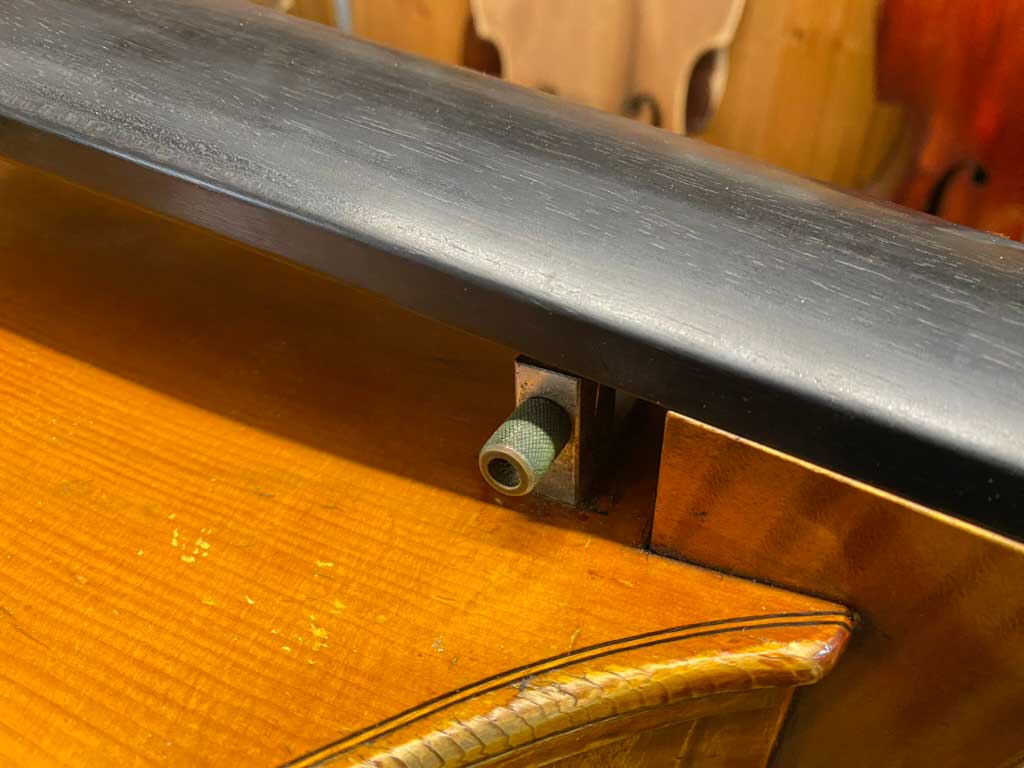
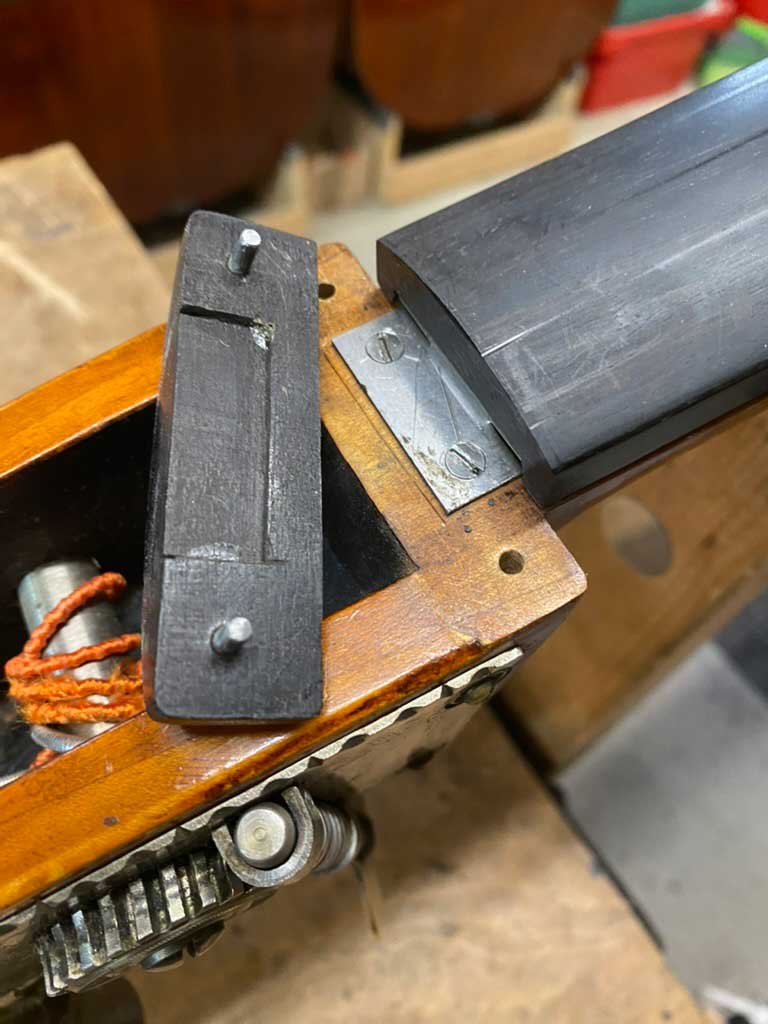
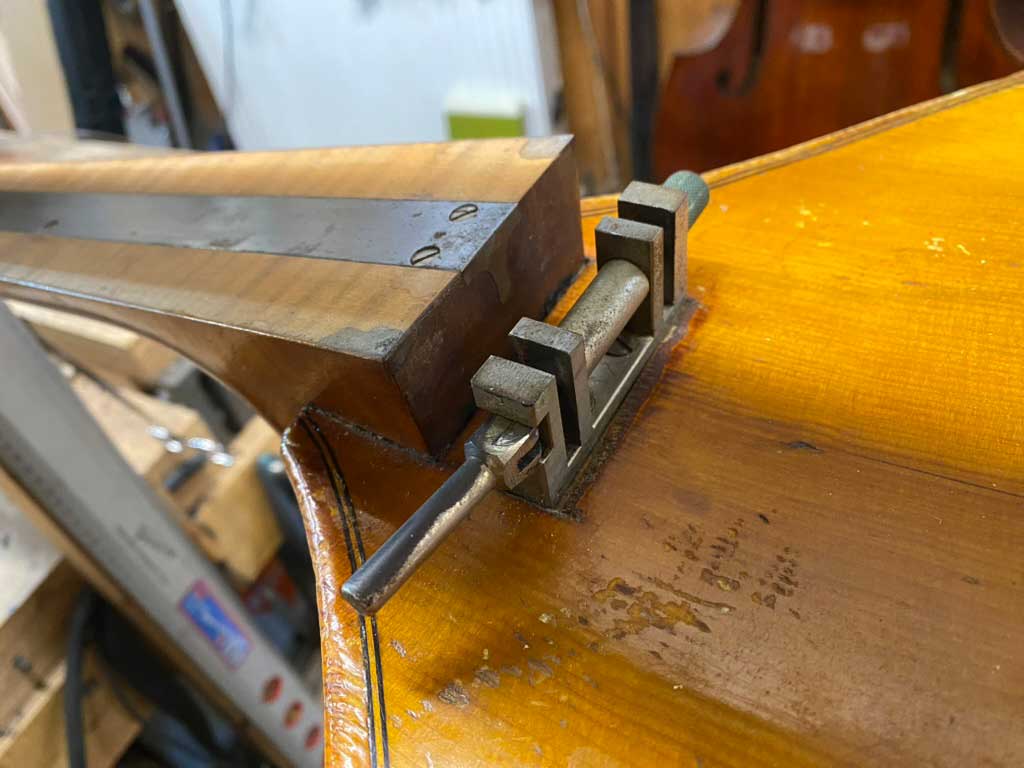
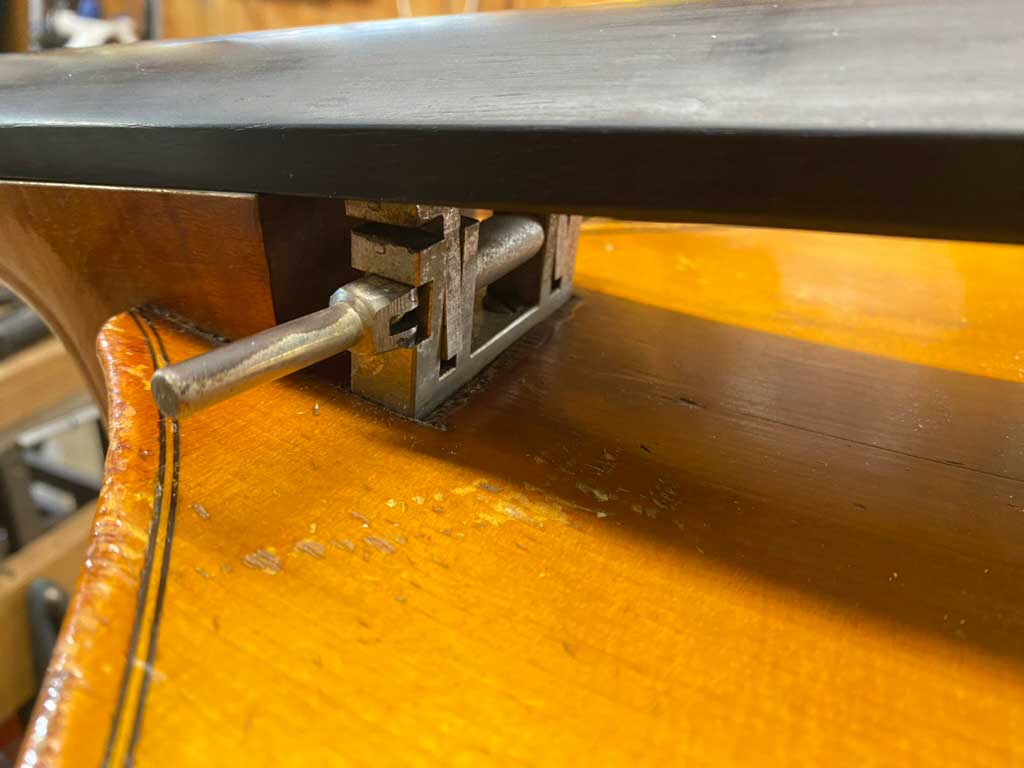
A customer recently brought me an interesting bass that had been fitted with a height-adjustable fingerboard (sic!) by the previous owner several decades ago. To achieve this, the fingerboard was screwed to the neck via a hinge beneath the nut. Beneath the fingerboard’s overhang, the angle of the fingerboard could be adjusted using a toggle lever. A stainless steel T-bar stabilized the neck, which would certainly have warped without the firmly glued fingerboard. Today, one would use a carbon insert here, but that material wasn’t available in the 1950s.
The whole design was very well executed from a craftsmanship standpoint—yet the customer still wanted it removed. Where the toggle clamp had been mounted on the neck block, I replaced the missing part of the top wood. The T-bar was not only screwed in but also glued—and could not be removed that easily. Milling it out was, of course, out of the question with stainless steel, as was applying significant force—so it stayed in place.
However, the bass is not entirely without adjustment options now: the bridge was fitted with Franz Moser’s height adjuster screws, as well as with a height-adjustable saddle.