Posted on

six stringer

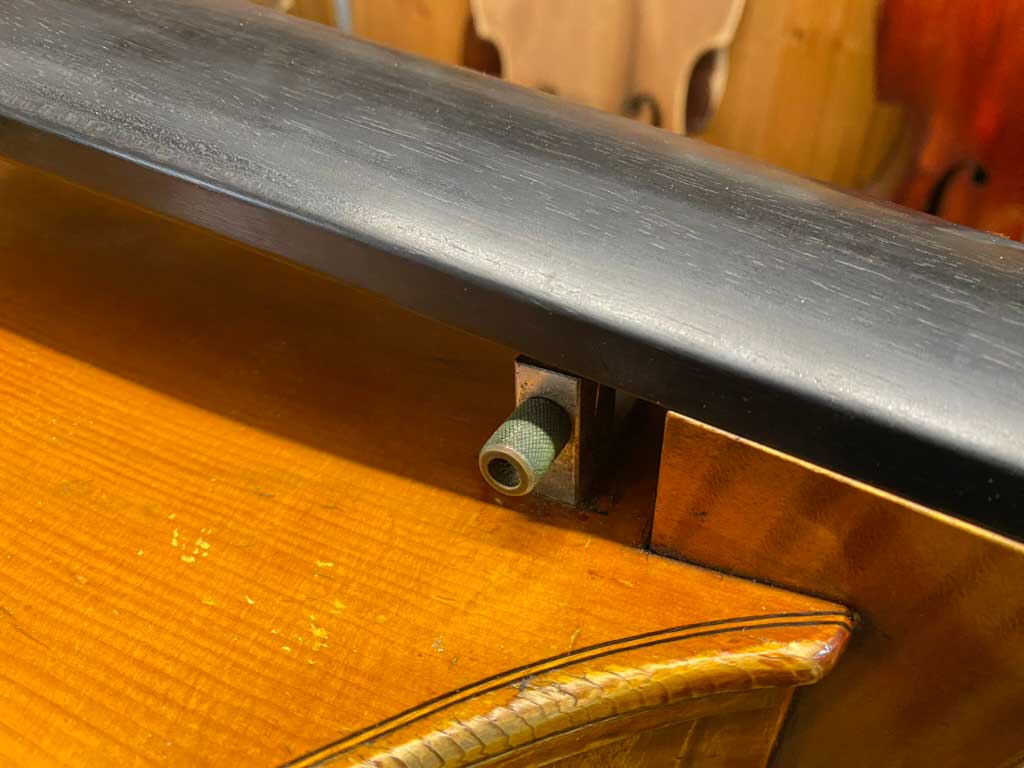
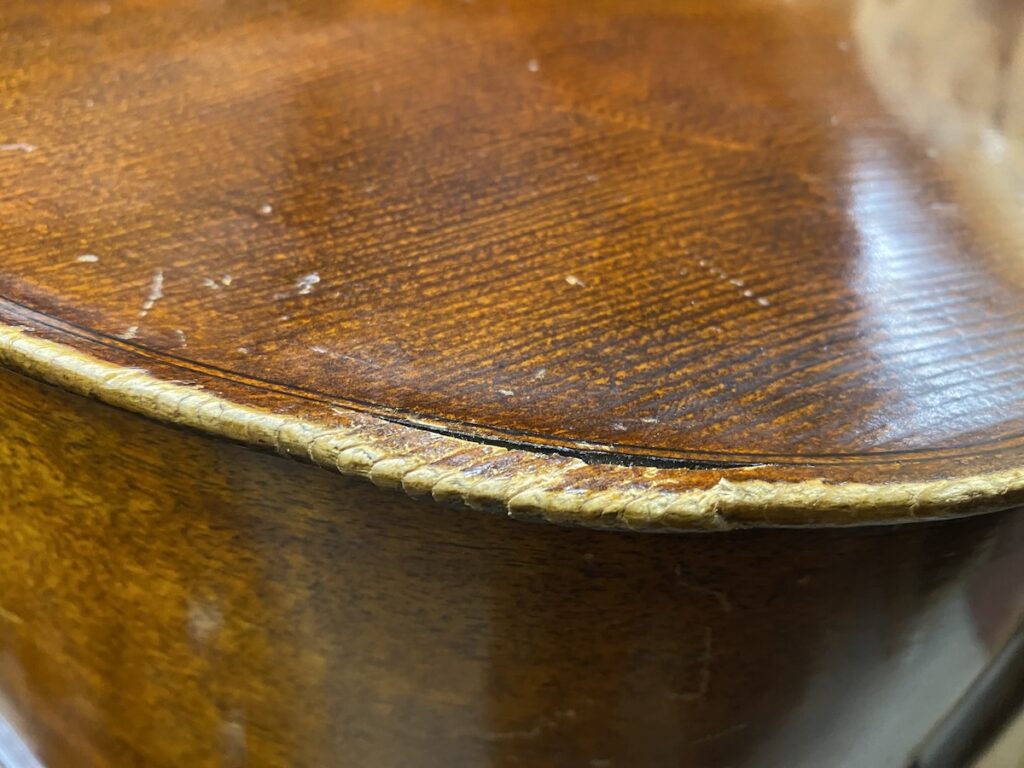
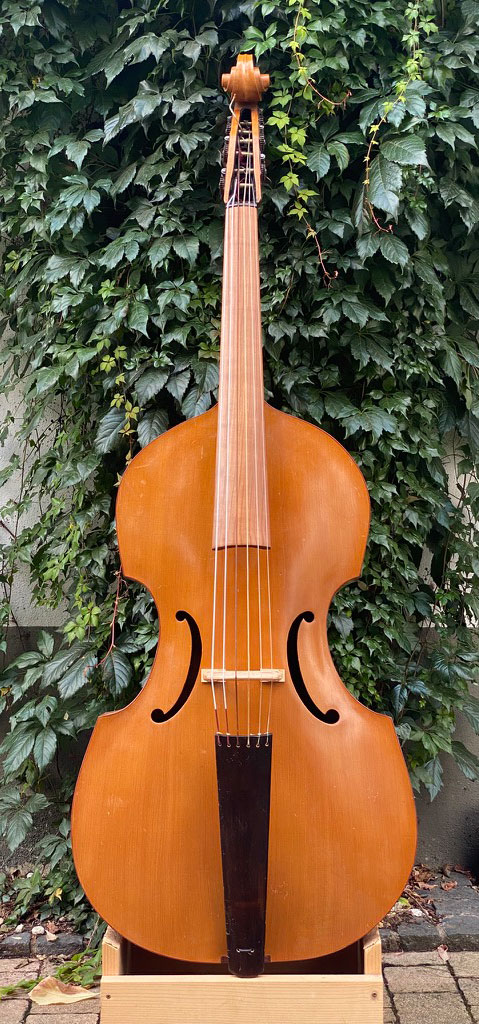
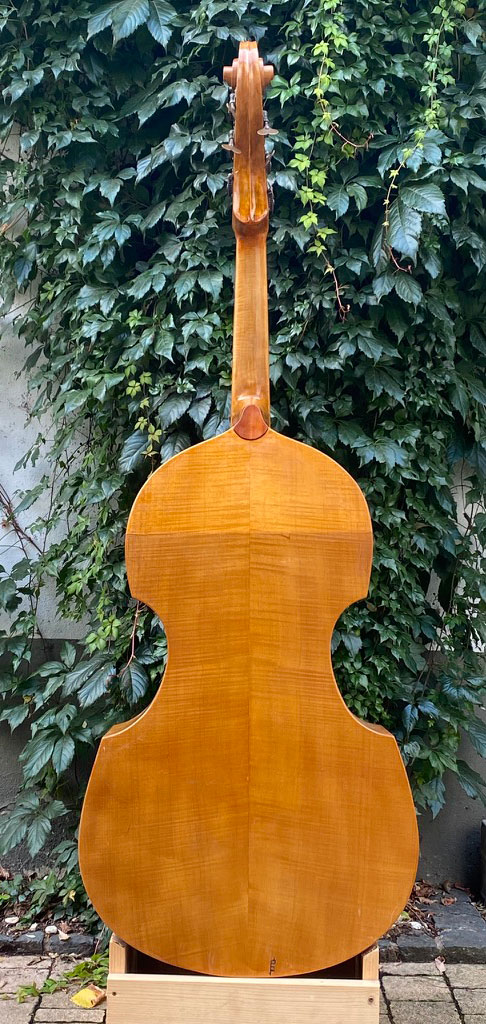
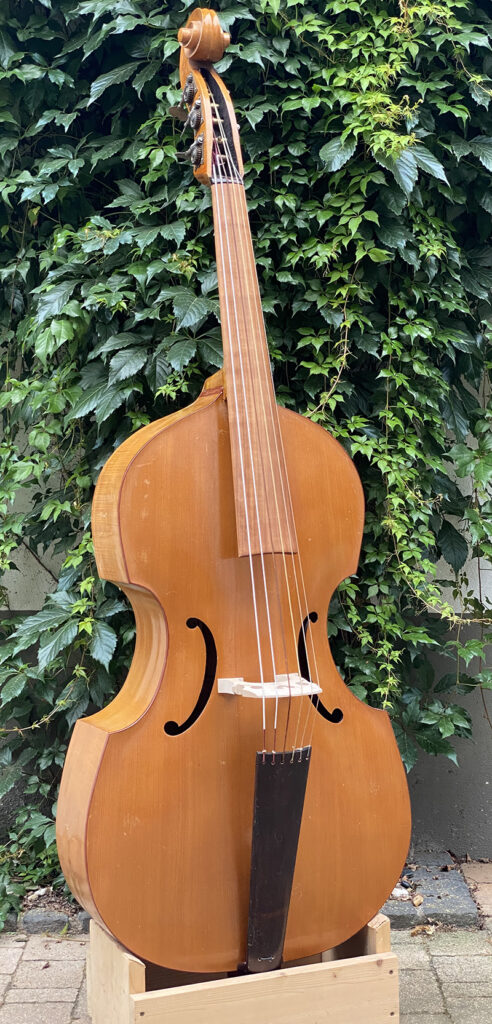
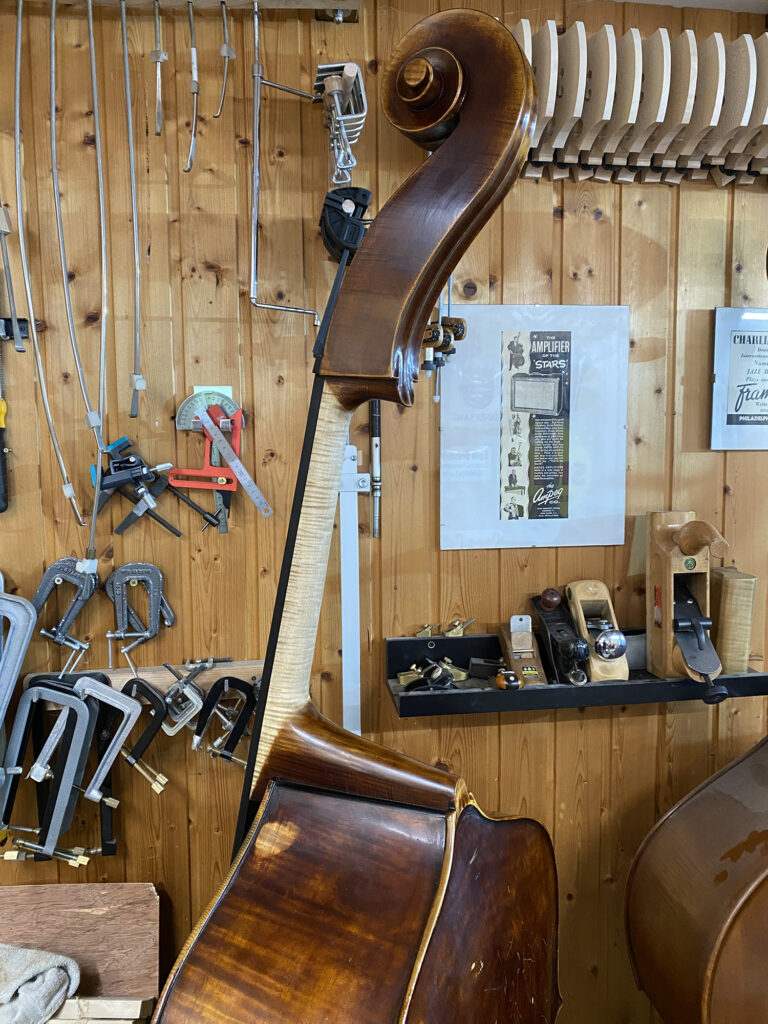
A double bass with six strings?!? No, a violone. This instrument, which belongs to the viola da gamba family, looks quite similar to a double bass, but the body is slightly larger than that of a ½ bass, while the scale length is slightly smaller at 90 cm.
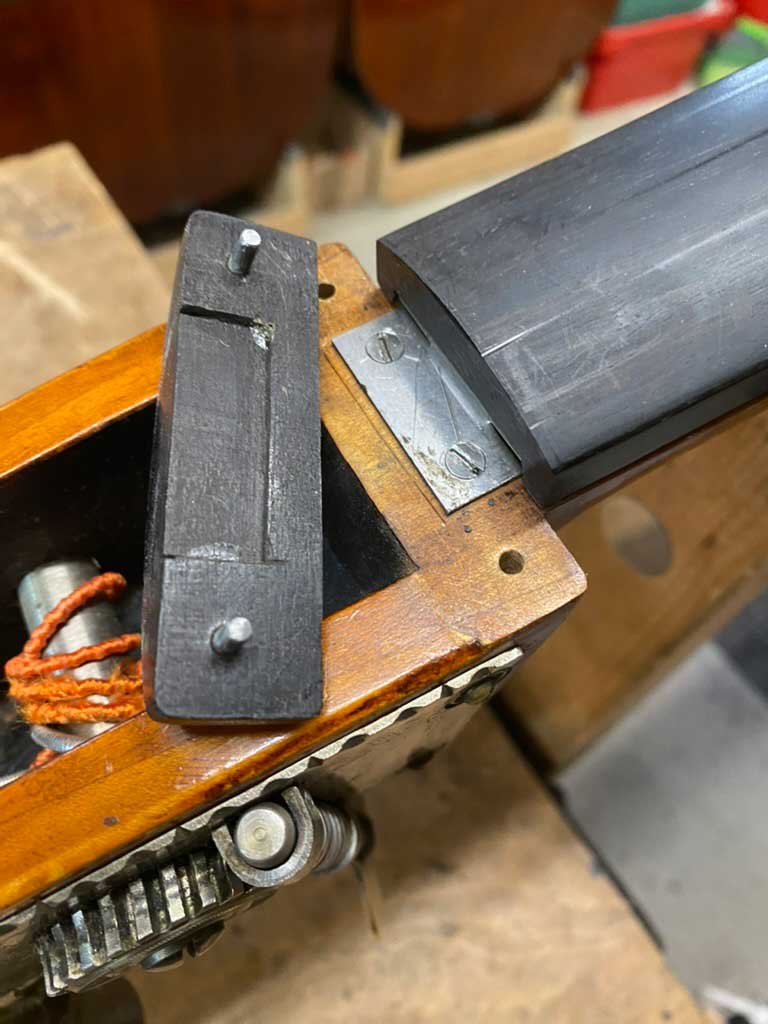
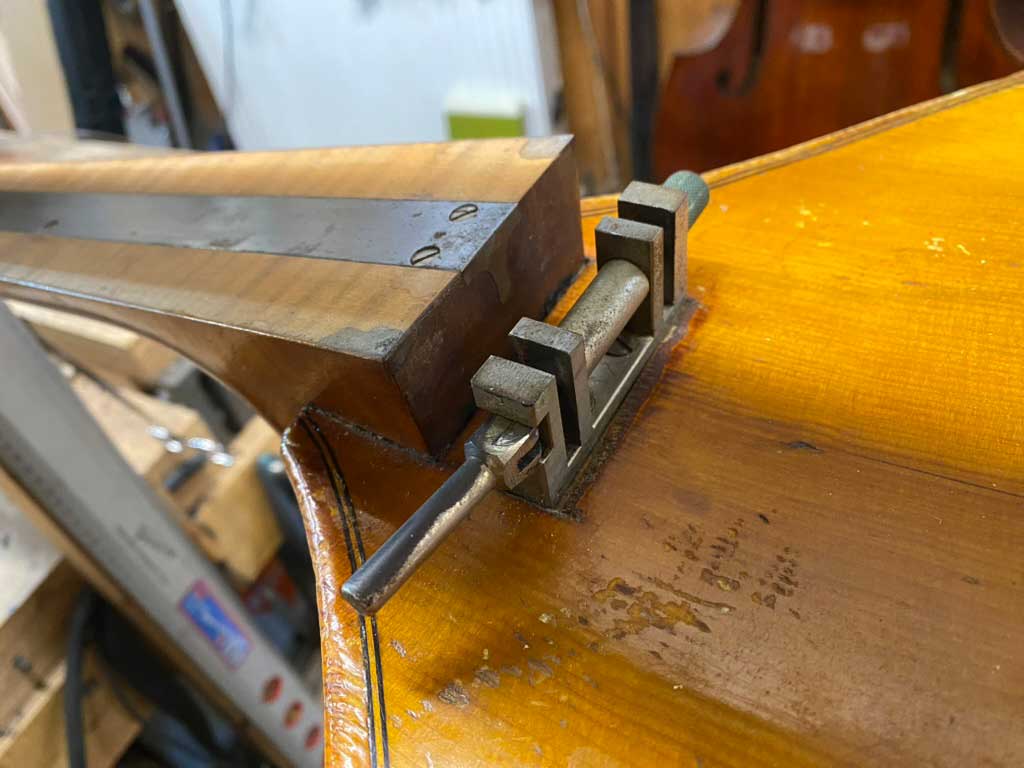
This G violone was built in 1962 by luthier Uebel in Celle/Germany. The tuning pegs are mounted in such a way that the direction of rotation of the pegs is the opposite of what you would expect from a bass. This means that you have to turn “downwards” to tune up. At first, I thought this was a mistake… something that can happen even to the most skilled instrument maker. However, I now assume that the tuning pegs were deliberately mounted this way so that the gut strings could be threaded over the pegs from below, rather than from above as is usually the case. This makes the angle at which the strings run over the nut slightly more acute, and the relatively thin and soft gut strings lie with a little pressure on the nut. The fairly wide notches in the original saddle indicate to me that the strings were previously strung in this way.

Posted on

The pickup test bass

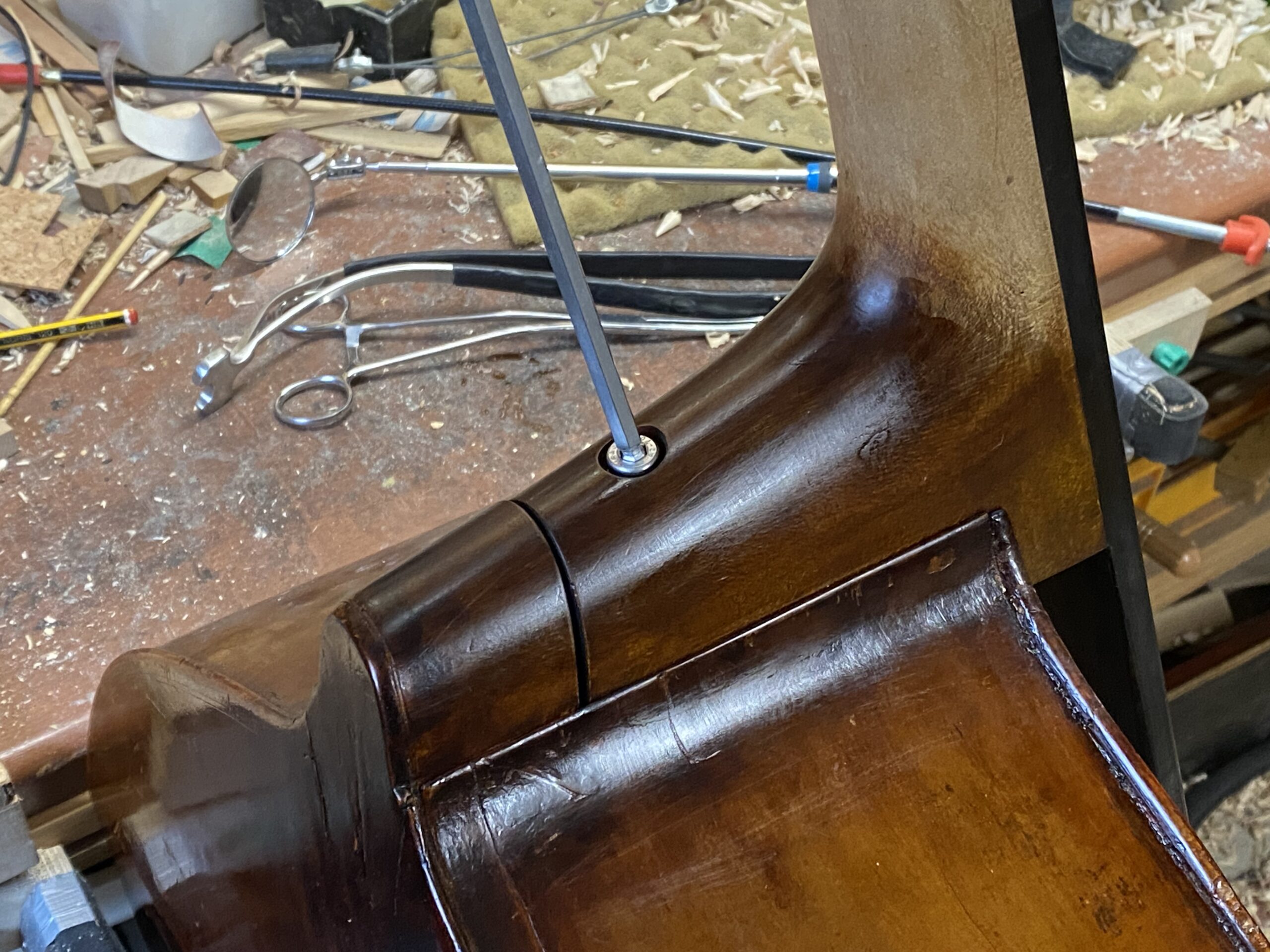
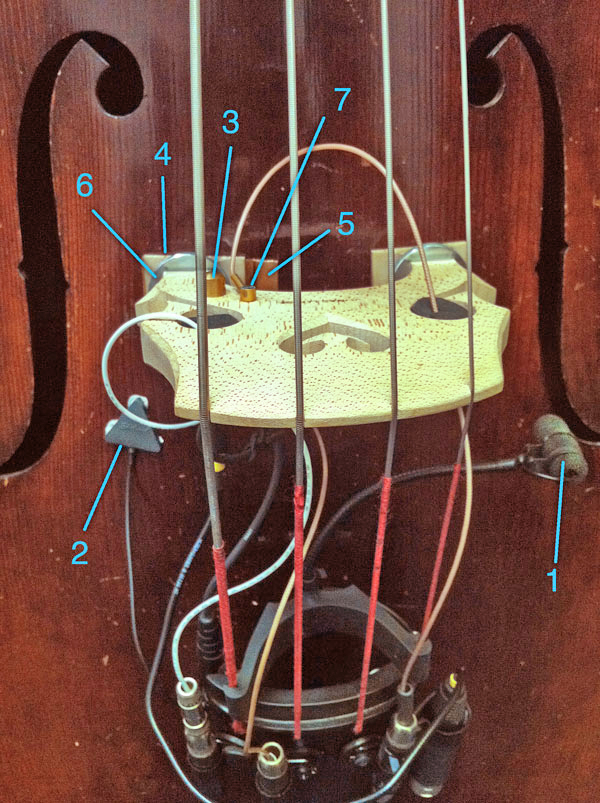
Pickups that are mounted under the bridge foot are quite easy to try out quickly on your own bass. It is more difficult to try out pickups for which the bridge has been modified or where the pickup has to be adapted to the bridge. In order to give our customers an impression of the sound character of these pickups, we have mounted them all on one bass. We also made recordings with this bass – that was in 2011, so it’s been a while, but in principle the recordings are still up to date. That’s why they get their own blog post here on our new website.

The pickup signals went directly into the mixing console (sometimes with a Lehle Sunday Driver XLR connected upstream for impedance matching). No tone control or effects, just the dry pickup sound. For a CD recording, the sound would certainly have been further optimized and the respective characteristics of the pickups would have been taken into account with adapted EQ settings – I deliberately refrained from doing this here. The pickups certainly sound different on stage: The amp and speakers color the sound, and of course the room acoustics also play a role. These recordings therefore do not reflect how a pickup sounds when amplified by an amp on stage.

www.soundcloud.com/landomusic

Posted on

new arrival: double bass “Wilhelm August Otto”

New arrival in the workshop: a double bass from the Vogtland region. Before the bass is playable again, it still needs a little work, but the substance is very good and pleasingly untouched. Even the original varnish is still in good condition and just needs a little touch-up.

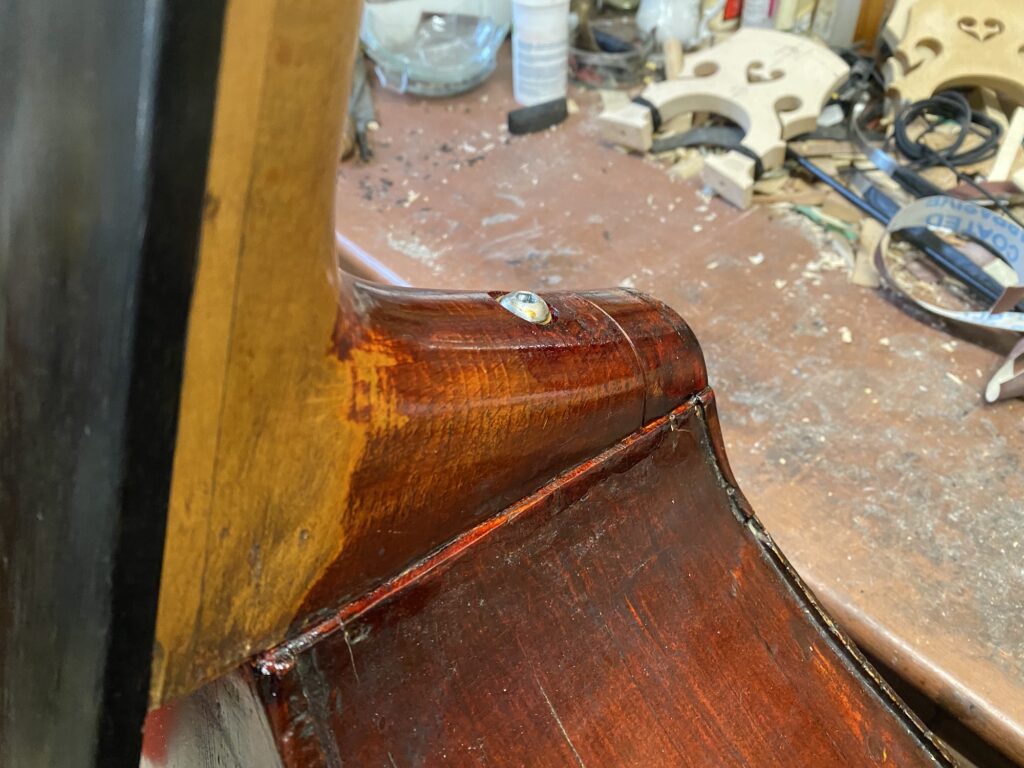
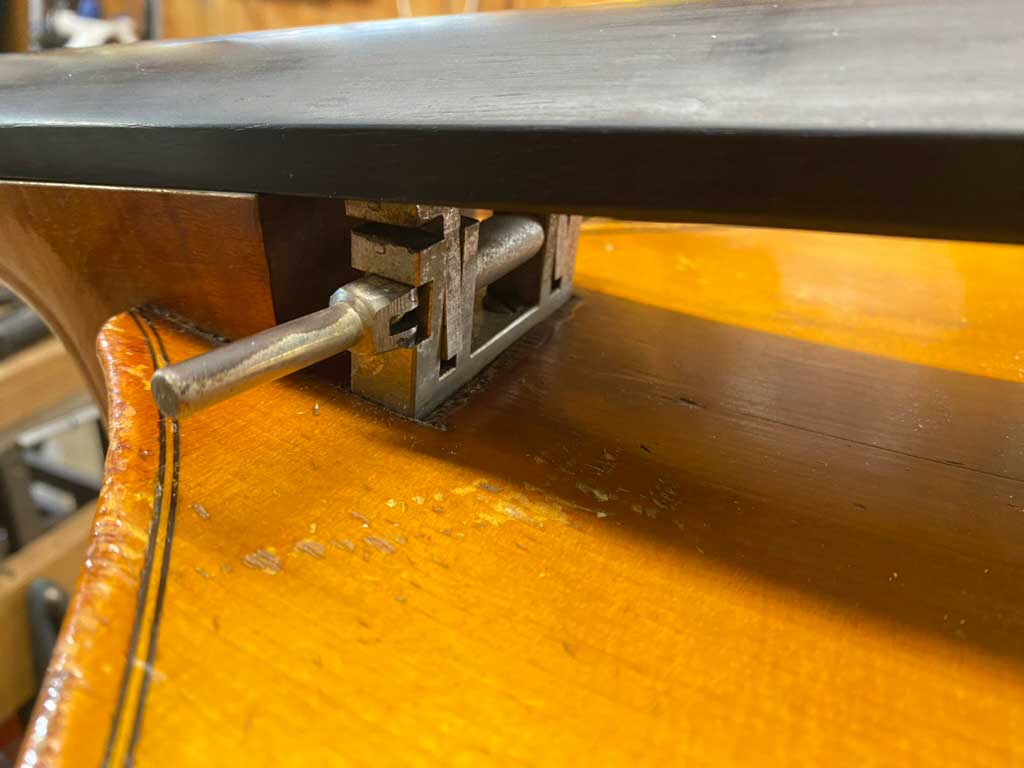
It is not known which workshop built the bass – the bass has no label. However, the dealer who resold the bass at the time attached a small metal label to the back with two nails: “Wilhelm August Otto | musical instruments & strings | Markneukirchen in Saxony.”
Metal labels like this, which were subsequently attached by dealers, are rather unusual on stringed instruments, but they are more common on (german) guitars. But at least the label gives us concrete information about the history of this bass, which often remains somewhat vague for most Vogtland instruments of this period.

Posted on

Soundpost with cap

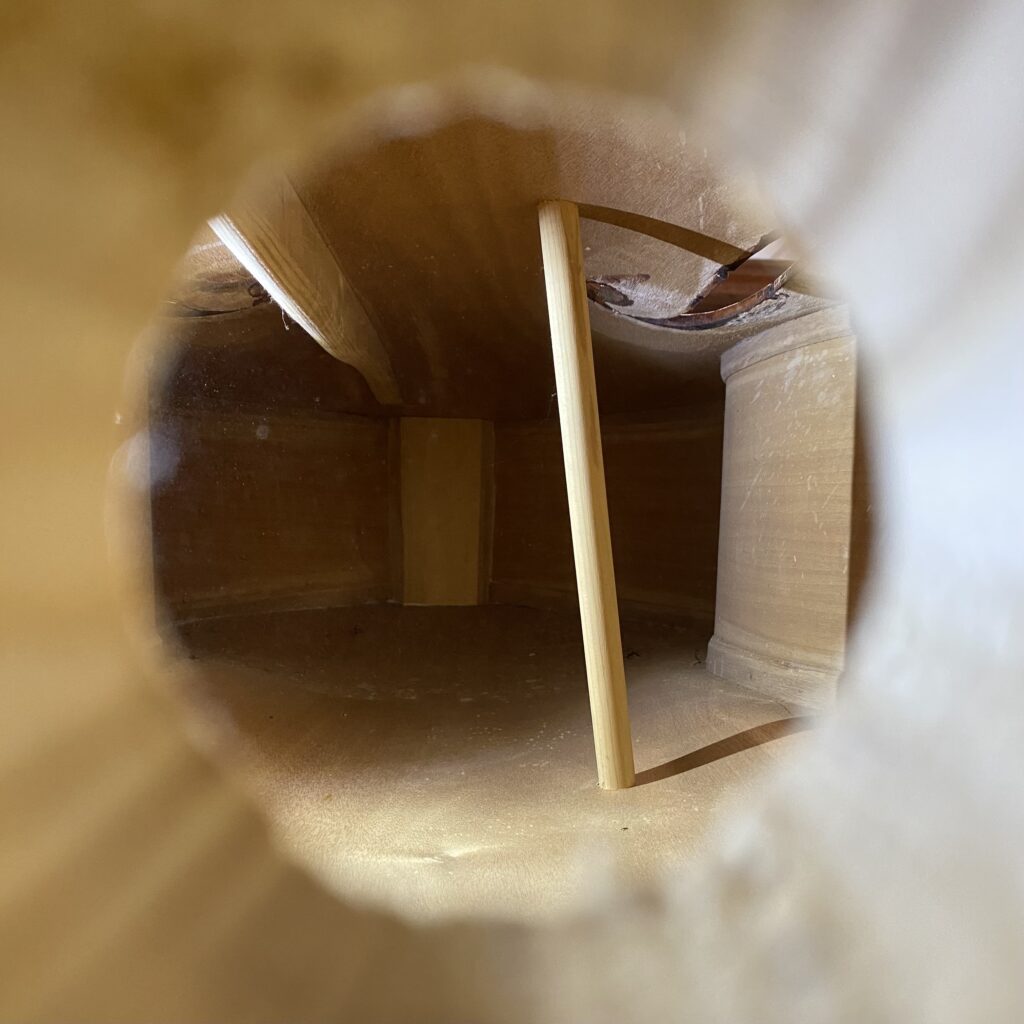
I discovered this remarkable soundpost in the bass of a music school:
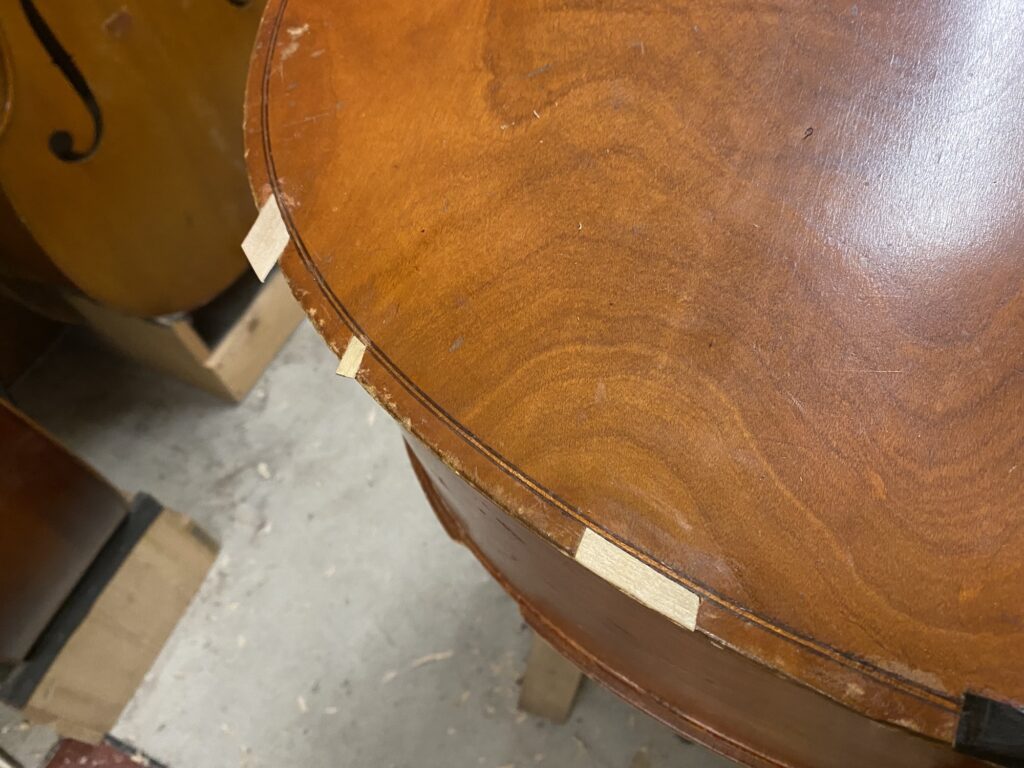
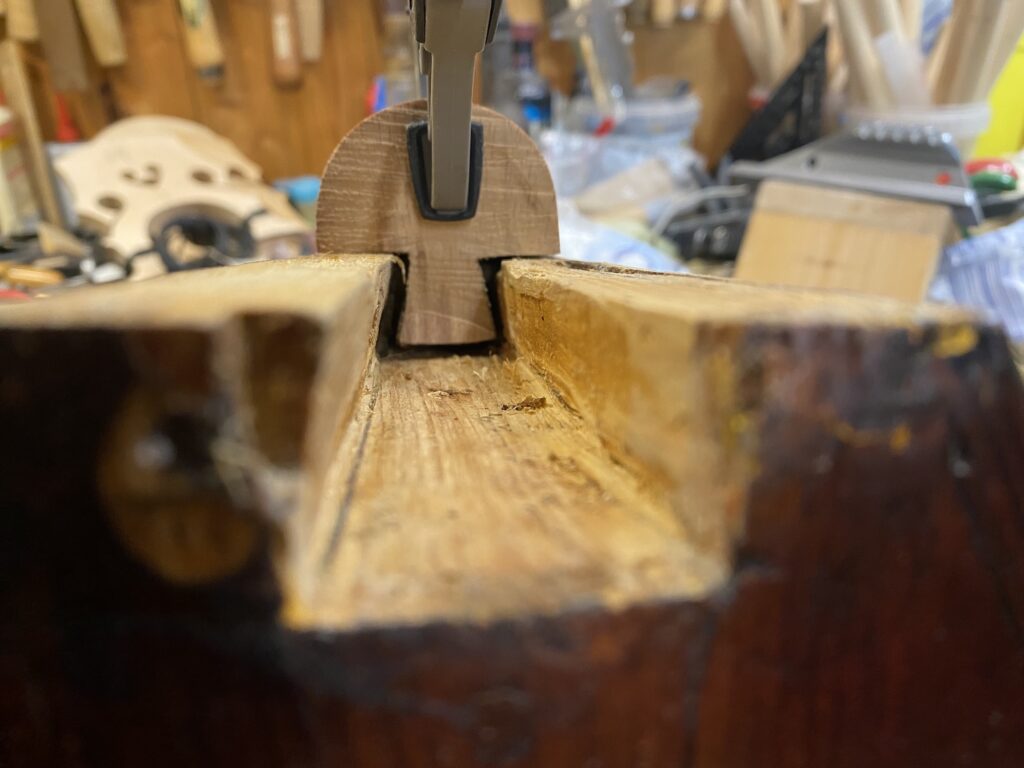
It is actually a little too short. Instead of a new soundpost, however, the last workshop decided to add something extra. So this soundpost was given a maple cap.

This is rare and remarkable because the cost of a soundpost lies less in the material and more in the working time. The careful adjustment of a soundpost is very time-consuming. It is not really worth it to glue something onto an old soundpost and then adjust it again.